MiningMinnesota empowers our members and the community to amplify a powerful voice for industrial development. Please use the resources below to learn more about responsible development in Minnesota. We encourage you to use these resources to inform your conversations with family, friends and peers. If you love the environment, we encourage you to get involved and be a positive influence on mining. All information we make available through our website is informed by science and facts.
Together, we can spread the positive message of nonferrous mining projects in Minnesota. Thank you.
THE FUTURE OF NICKEL MINING • THE FUTURE OF COBALT MINING • THE FUTURE OF PRECIOUS METALS MINING • THE FUTURE OF COPPER MINING •THE FUTURE OF NICKEL MINING • THE FUTURE OF COBALT MINING • THE FUTURE OF PRECIOUS METALS MINING • THE FUTURE OF COPPER MINING •THE FUTURE OF NICKEL MINING • THE FUTURE OF COBALT MINING • THE FUTURE OF PRECIOUS METALS MINING • THE FUTURE OF COPPER MINING •

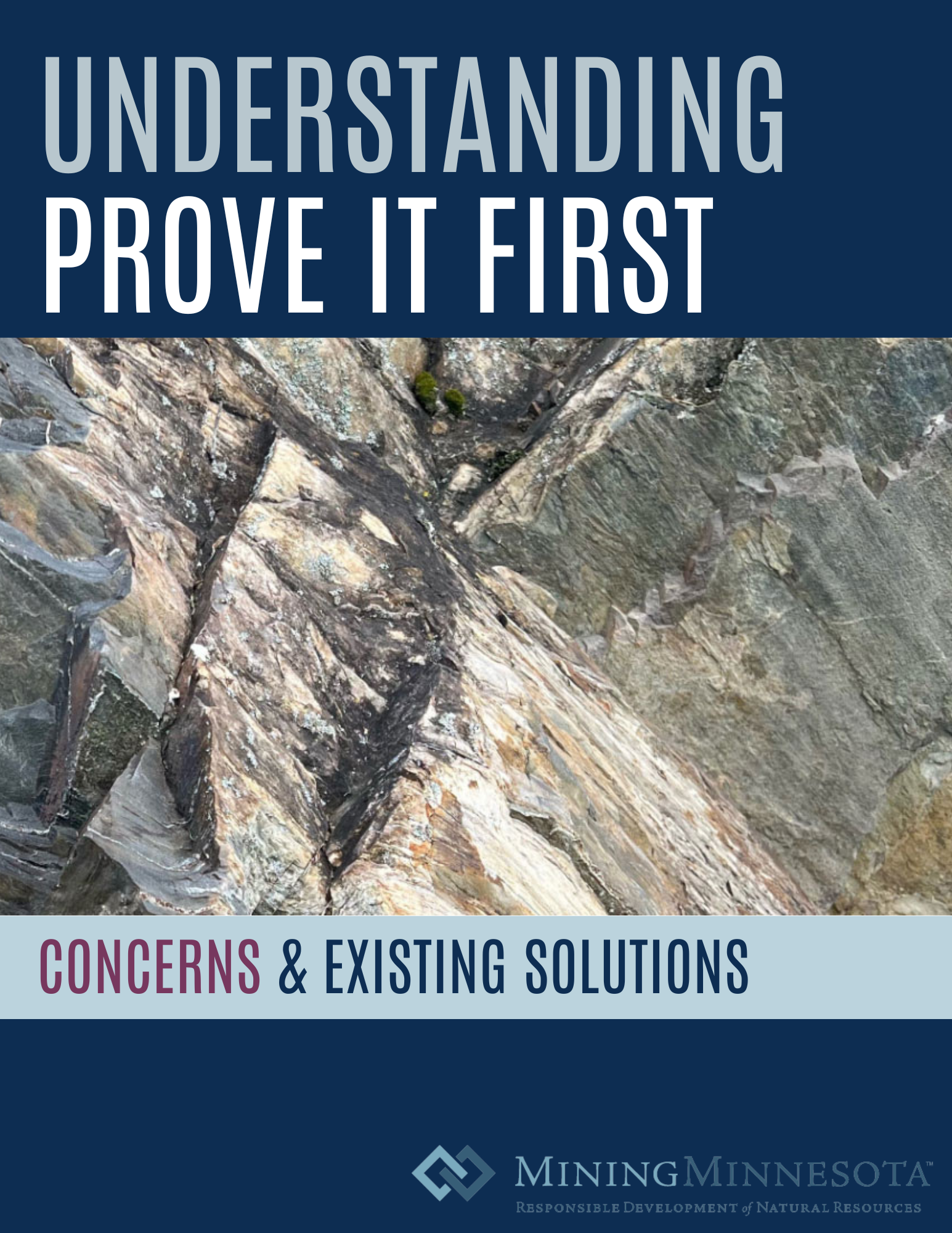
Responsible nonferrous mining has already been done or is still taking place safely in Wisconsin (Flambeau Mine) and Michigan (Eagle Mine). Read through concerns and existing solutions that disprove a need for the proposed Prove It First bill in Minnesota.

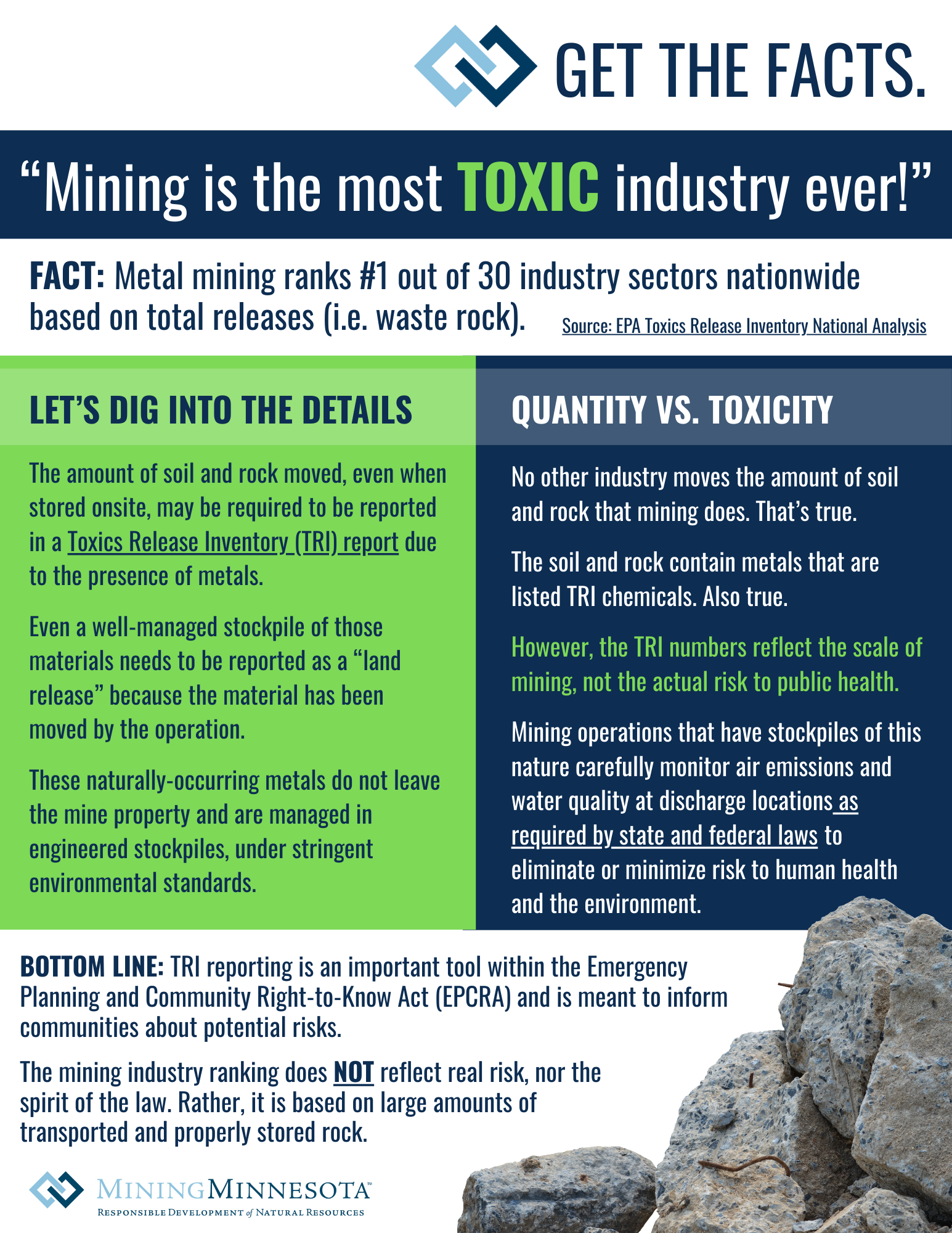
The Environmental Protection Agency’s Toxics Release Inventory (TRI) is a valuable tool with transparent information about nearby commercial and industrial activities. However, it tracks the volume of material moved or managed, not actual toxicity and risk.

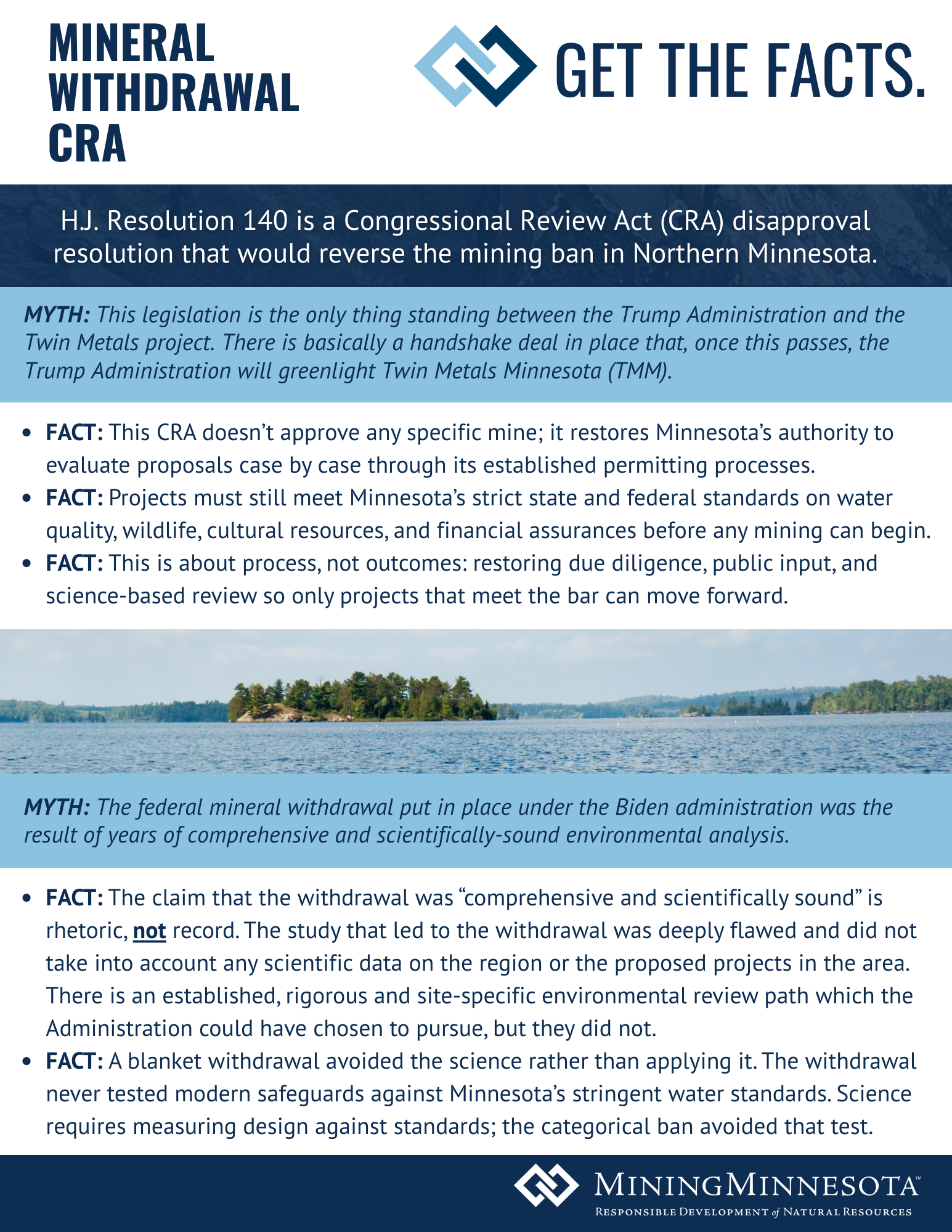
In 2023, a federal mining ban (“mineral withdrawal”) was enacted across 225,000 acres of federal lands in NE MN which stopped several companies from pursuing responsible resource development and locked out any future exploration and mining for 20 years.

Supporting H.J. Res. 140 and using the Congressional Review Act (CRA) to overturn the mineral withdrawal in NE MN would restore access to federal lands within existing mineral rights and allow the law-and science-based regulatory process to move forward.

Exploration is simply the research phase: gathering data, drilling small test holes, and studying what’s underground. Understanding our own resources doesn’t mean approving a mine. It means making informed decisions as a state about responsible development.

Minnesota doesn’t pretend there isn’t risk. Instead, we manage and minimize that risk by layering science, planning, financial responsibility, insurance, and accountability. That’s how Minnesota takes concerns seriously and turns them into protections.

Not all public lands are managed the same – and that matters. Here’s a quick guide to the differences between national forests, national parks, and wilderness areas. Each designation reflects a different balance of conservation, recreation, and responsible use.